

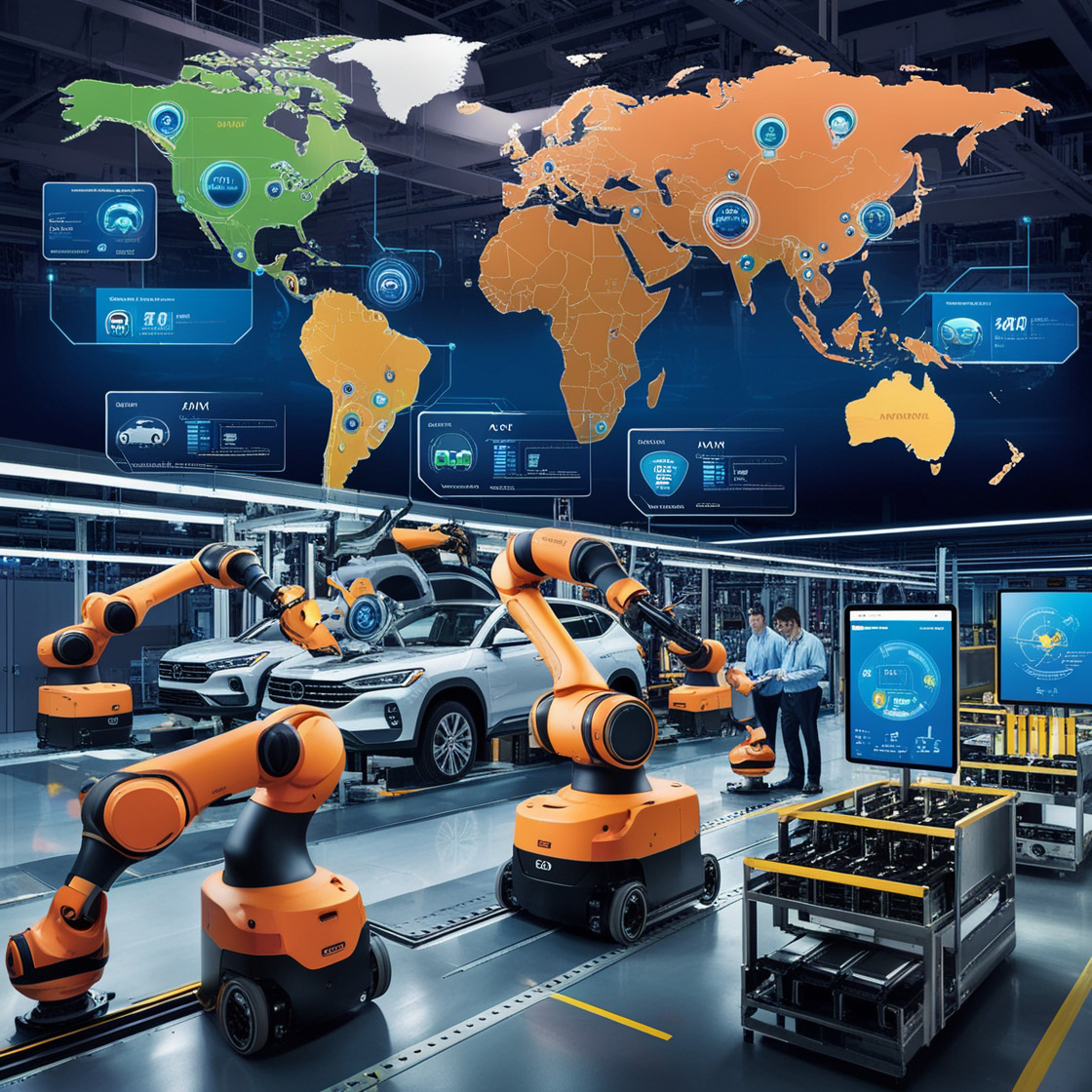
Automation and robotics have become essential drivers of transformation in the automotive industry, reshaping how vehicles are designed, manufactured, and delivered. As these technologies continue to advance, their impact is being felt not just in established markets but also in emerging economies, where they are paving the way for a new era of automotive production. This article explores the global trends and projections that highlight the significant role of automation in the industry.
The Rise of Automation in Established Markets
In established automotive markets such as the United States, Germany, and Japan, automation and robotics have been at the forefront of production for decades. These regions have pioneered the use of advanced robotics to enhance efficiency, precision, and safety in manufacturing processes. In these markets, the integration of automation has led to significant reductions in production costs, increased output, and the ability to meet the high demands of global consumers.
One of the key trends in these markets is the shift towards more intelligent and autonomous robotic systems. Artificial Intelligence (AI) and Machine Learning (ML) are being increasingly integrated into manufacturing robots, enabling them to perform complex tasks with minimal human intervention. This shift is driving the development of smart factories, where interconnected machines and systems can communicate and coordinate in real-time, leading to more agile and responsive production environments.
Emerging Markets Embrace Automation
Emerging markets, particularly in Asia and Latin America, are rapidly embracing automation and robotics to strengthen their automotive industries. Countries like China, India, and Brazil are investing heavily in automation technologies to compete on a global scale. In these regions, automation is seen as a crucial tool for achieving the high levels of quality and efficiency required to meet international standards.
China, for instance, has become a leader in the adoption of industrial robots, driven by its goal to modernize its manufacturing sector. The country is not only deploying robots in automotive manufacturing but is also investing in domestic production of robotics to reduce reliance on foreign technology. Similarly, India is witnessing a surge in automation adoption, with a focus on improving productivity and reducing labor-intensive processes.
These emerging markets are also benefiting from the transfer of technology and expertise from established markets. Global automotive manufacturers are setting up production facilities in these regions, bringing with them advanced automation technologies and best practices. This trend is accelerating the growth of the automotive industry in these markets, enabling them to become key players in the global supply chain.
Technological Advancements and Future Projections
The future of automation in the automotive industry is set to be shaped by several key technological advancements. Autonomous Mobile Robots (AMRs), collaborative robots (cobots), and AI-driven systems are expected to play increasingly prominent roles in production. These technologies will not only enhance efficiency but will also enable greater customization, allowing manufacturers to meet the growing demand for personalized vehicles.
Additionally, the integration of the Industrial Internet of Things (IIoT) will lead to smarter and more connected factories. IIoT-enabled systems will allow manufacturers to collect and analyze data from every stage of production, leading to continuous improvements in quality, efficiency, and sustainability.
Looking ahead, the global automotive industry is projected to see even greater adoption of automation and robotics, with emerging markets playing a significant role in this growth. As technology continues to advance, the boundaries of what is possible in automotive manufacturing will expand, leading to a more efficient, innovative, and globally interconnected industry.
Automation and robotics are revolutionizing the automotive industry on a global scale. From established markets to emerging economies, these technologies are driving significant changes in how vehicles are produced. As we look to the future, the continued integration of advanced automation technologies promises to reshape the industry, creating new opportunities and challenges in a rapidly evolving global landscape.