


As we move through 2025, industrial automation is no longer a futuristic concept—it’s a competitive necessity. With smarter systems, AI-driven processes, and digital twins becoming mainstream, automation is rapidly reshaping operations across diverse sectors. From precision-driven aerospace components to high-volume food packaging, automation trends are unlocking new levels of efficiency, quality, and adaptability. Here’s how various industries are evolving under the automation wave in 2025.
Automotive Industry: Driving with Intelligence
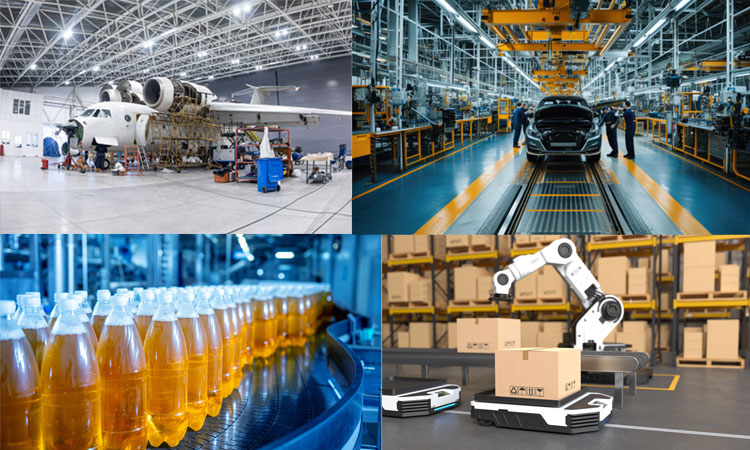
The automotive industry remains a frontrunner in automation adoption. In 2025, intelligent manufacturing cells, collaborative robots (cobots), and AI-powered quality inspection are now standard in Tier 1 and OEM plants. Electric vehicle (EV) production lines are more modular, with increased use of machine learning for predictive maintenance and digital twin models for real-time process optimization. End-to-end traceability systems ensure compliance and enhance safety, while autonomous intralogistics and warehouse automation reduce downtime.
Aerospace: Precision and Compliance at Speed
Aerospace manufacturing, known for its stringent tolerances and documentation requirements, has embraced automation for high-mix, low-volume production. In 2025, aerospace plants are increasingly relying on automated NDT (non-destructive testing), advanced metrology, and robotic drilling and fastening systems. AI-based analytics are being used to optimize component life cycles, while augmented reality (AR) is aiding in technician training and maintenance. Digital twins enable real-time simulation of performance under various conditions, making processes smarter and more reliable.
Heavy Engineering: Lifting Efficiency to New Heights
In heavy engineering, the focus has shifted to automating complex and labor-intensive operations like welding, forging, and machining of large components. Robotic arms designed for extreme loads, CNC machines with AI algorithms for adaptive cutting, and integrated monitoring systems are prevalent. In 2025, cloud-based platforms now link fabrication, inspection, and logistics data, enhancing visibility and productivity. Energy efficiency and remote diagnostics are also top priorities as industries push toward sustainable manufacturing.
Food & Beverages: Speed, Safety, and Shelf Life
Speed, hygiene, and traceability define automation in the food and beverage sector in 2025. Vision-guided robotic pick-and-place systems, automated filling and capping lines, and smart sensors for temperature and contamination control are widespread. AI is now being used to predict demand and adjust production volumes dynamically, minimizing waste. Packaging automation includes serialization and QR-based tracking to enhance transparency for consumers.
Packaging: Smart, Sustainable, and Scalable
Sustainability and flexibility drive packaging automation trends in 2025. Automated lines now handle recyclable and biodegradable materials with ease. Machine vision systems ensure consistency in labeling and sealing, while IIoT-enabled packaging machines provide real-time alerts for deviations. Quick changeover systems and modular layouts allow manufacturers to switch between SKUs rapidly, ideal for e-commerce and personalized product demands.
Textile: Digitally Woven Future
The textile sector has undergone a quiet but powerful transformation. In 2025, smart looms, automated dyeing systems, and robotic fabric handling are improving throughput and quality. Automation is especially vital in areas like pattern design and color matching, where AI tools are now standard. Integration with PLM and ERP systems ensures better planning, while sustainable water usage and energy monitoring technologies enhance eco-compliance.
Electronic Component Manufacturing: Micro Precision, Macro Impact
In electronics, 2025 automation is defined by ultra-precision and high-speed micro-assembly. Robotic soldering, automated optical inspection (AOI), and cleanroom-ready material handling systems are now widespread. AI-enabled defect prediction and autonomous production planning ensure near-zero defect rates. As components get smaller and more complex, automation ensures not just speed but also traceability and compliance with international quality standards.
Automation in 2025 is about more than machines—it’s about creating intelligent, connected, and adaptive manufacturing ecosystems. Across all sectors, companies investing in next-gen automation tools are experiencing higher ROI, faster time to market, and enhanced global competitiveness. Those who lag behind risk being left out of the next industrial revolution already underway.