


Q: How is DesignTech enabling digital transformation in Indian manufacturing through automation and Industry 4.0?
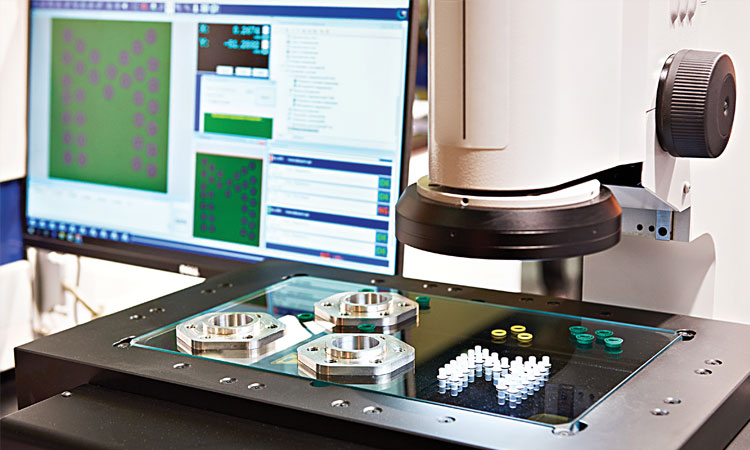
DesignTech recognized early the shift toward automation and smart manufacturing. We’ve expanded our capabilities to help companies transition into digital, data-driven production environments. One of our key offerings includes customer-specific factory automation and AI-powered Vision Inspection Systems. These systems use deep learning and smart image processing to detect even the subtlest of manufacturing defects—such as cracks, bends, surfacing issues, or tolerance deviations—ensuring zero rejections and top-tier quality.
We also support clients in workflow-specific challenges like robotic simulation, assembly line automation, and intelligent monitoring systems, helping companies achieve greater control, accuracy, and performance.
Q: What is the impact of PLM, CAD/CAM/CAE, simulation, and 3D printing in today’s automated setups?
PLM acts as a digital backbone, enabling end-to-end process visibility across R&D and manufacturing. It enhances traceability, resource planning, cost management, and design iteration control.
Modern CAD tools support generative design and manufacturing feasibility, minimizing errors and accelerating time-to-market. CAE, especially through Digital Twin technology, enables real-time system monitoring and predictive maintenance, which boosts uptime and productivity.
Specialized CAE tools like robotic simulation and sheet metal forming help validate system performance, improving durability and functionality.
3D printing is revolutionizing direct digital manufacturing with lightweight, complex components made from high-performance materials. Its use in jigs, fixtures, mould inserts, and production parts is growing across sectors like automotive, aerospace, medical devices, and consumer products.
Q: Can you share a success story where your automation significantly benefited a customer?
We worked with an automotive client producing alloy wheels who faced quality issues due to manual inspection. Surface defects were often missed. We implemented a custom VisionX solution with AI-based image processing and high-resolution cameras. It detected real-time flaws like cracks and porosity, eliminating manual errors, reducing rejections, cutting material waste, and boosting overall productivity.
Q: What are the most common automation challenges industries face—and how do you help solve them?
Many companies struggle to identify automation-ready areas and fear disrupting existing workflows. Older setups are hesitant and wary of change. We engage directly with plant teams to uncover opportunities. For example, one company manually counted sheet metal blanks. We introduced a hand-held smart scanner that instantly counts stacked sheets—simple, affordable, and time-saving.
We specialize in niche, need-specific automation—from grain visual inspection to large-scale factory automation—helping customers transition smoothly and effectively into digital manufacturing.
Q: How is DesignTech future-proofing its offerings with AI, robotics, and IoT?
AI is at the heart of our solutions. Our VisionX system uses deep learning to identify even evolving defects. With AI and IoT integration, manufacturers gain real-time visibility, predictive insights, and traceability—enabling autonomous operations and minimizing downtime or failures.
Q: What is your vision for DesignTech’s impact on India’s automated manufacturing landscape?
We pioneered CAD/CAM/CAE adoption among SMEs and aim to replicate that with factory automation. Our mission is to empower even small manufacturers with affordable, targeted automation solutions—driving agility, innovation, and efficiency across India’s manufacturing ecosystem.